Advice

September 30, 2026

By: Zara Sahota

Round vs Rectangular vs Oval Dining Table: Which Shape? 

The right dining table shape comes down to your room proportions, number of seats and how you move through the space. Round tables work beautifully in square and compact rooms, rectangular tables make the most of longer spaces and larger gatherings, while oval tables offer length with softer edges. 

Choosing between a round vs rectangular vs oval dining table isn't only about looks. The shape can influence everything from conversation and seating capacity to how easily you pull out a chair or walk between your dining and living areas. 

Quick guide: dining table shape by room & lifestyle


Start with the shape of your dining area and how many people you regularly seat.


Table shape

Best suited to

Key benefit

Consider

Round 

Square, compact or conversational spaces 

Easy flow and sociable seating 

Larger sizes require more floor space 

Rectangular 

Long rooms, larger households and entertaining 

Maximises seating 

Corners can take up circulation space 

Oval 

Long or open-plan spaces 

Generous seating with softer edges 

Less tabletop area at curved ends 

Extension 

Flexible spaces and frequent entertainers 

Adapts to different guest numbers 

Measure at its fully extended size 


Whichever shape you choose, allow enough room for your dining chairs to pull out comfortably and for people to move around the setting. 

Round dining tables: pros, cons & best rooms


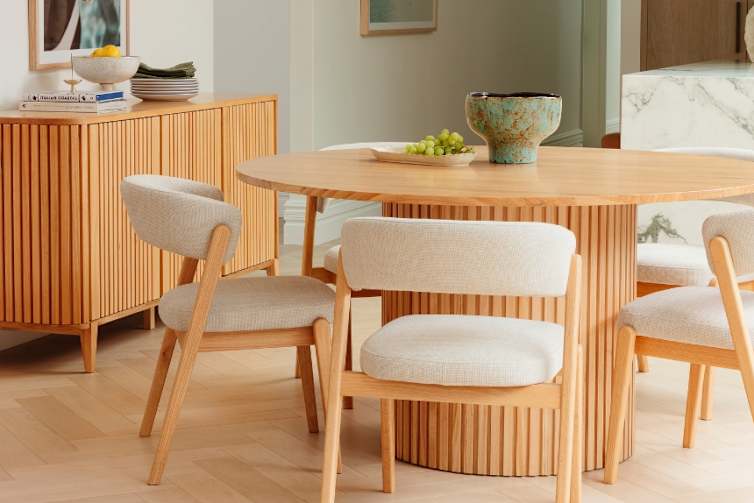
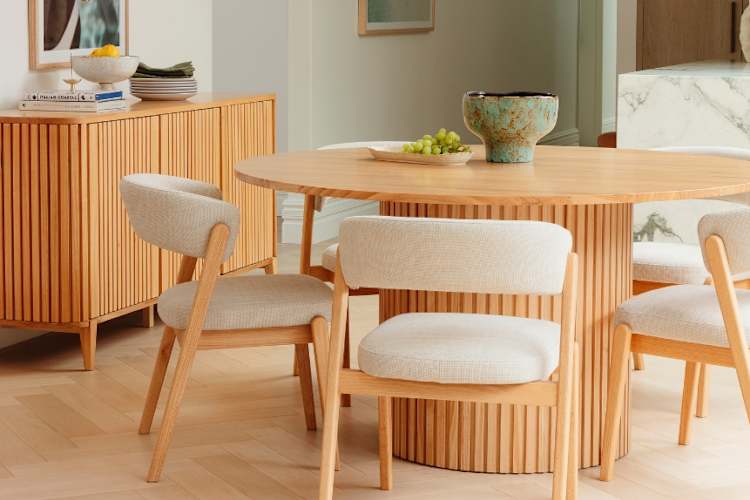
Round dining tables are particularly suited to square rooms, smaller dining zones and spaces where easy conversation is a priority. 

Without corners, a round table creates softer lines and allows people to move naturally around it. Every diner faces towards the centre, making it ideal for relaxed meals and conversation. 

Pros of a round dining table 

  • Creates a sociable, intimate setting 

  • No sharp corners 

  • Works naturally within square rooms 

  • Can improve flow in compact dining areas 

  • Creates a softer visual contrast against straight walls and cabinetry 

  • Pedestal designs can offer flexible chair placement 

42.jpg42.jpg
43.jpg43.jpg

Cons of a round dining table 

Round tables become less space-efficient as they get larger. Increasing seating capacity means increasing the table's diameter in every direction, which can take up considerable floor space. 

Very large round tables can also make it harder to reach shared dishes in the centre. 

Choose round if: you usually seat a smaller group, have a square or compact dining area or want your dining setting to feel relaxed and conversational. 

Rectangular dining tables: pros & cons


Rectangular dining tables are a practical choice for longer rooms, larger households and anyone who regularly entertains. 

Their elongated shape makes efficient use of rectangular dining areas and offers plenty of surface space for everyday meals, serving dishes and larger gatherings. 

Pros of a rectangular dining table 

  • Works naturally in long or rectangular rooms 

  • Accommodates larger groups efficiently 

  • Provides generous tabletop space 

  • Easy to add chairs at the ends when space allows 

  • Creates a strong anchor in open-plan spaces 

  • Available in a wide variety of sizes and styles 

A rectangular table can also work particularly well with bench seating or an extension dining table when you need flexibility for entertaining. 

44.jpg44.jpg
45.jpg45.jpg

Cons of a rectangular dining table 

Corners can make movement tighter in compact rooms, while a large rectangular design may feel visually heavy in a small or square space. 

Longer tables can also create greater distance between diners at opposite ends, giving them a slightly more formal feel than round tables. 

Choose rectangular if: you regularly seat six or more people, have a longer dining room or want a table that can comfortably accommodate larger gatherings. 

Oval dining tables: the best of both? 


An oval dining table combines the length and seating potential of a rectangular table with the softer edges of a round design. 

The curved ends reduce visual bulk and can make it easier to move around the table, particularly in open-plan spaces or dining zones positioned along a walkway. 

Oval tables are especially useful when you love the generous proportions of a rectangular table but want something that feels softer and more sculptural. 

Why choose an oval dining table? 

  • Softer edges improve visual flow 

  • Suits longer and open-plan rooms 

  • Accommodates more diners than many round tables 

  • Creates a less formal look than a traditional rectangle 

  • Curved ends can make tighter walkways easier to navigate 

The trade-off is slightly less usable surface area at the curved ends compared with a rectangle of similar dimensions. 

Choose oval if: you need generous seating but prefer softer forms, or your dining setting sits within a busy open-plan area where circulation matters.

46.jpg46.jpg

Shape, seating & flow 


The best dining table shape is one that comfortably accommodates both your diners and the movement around them. 

OZ Design recommends allowing around 90 - 120cm of clearance around your dining table where possible, giving chairs room to pull back and helping maintain practical walkways. 

47.jpg47.jpg

The base of the table matters too. A pedestal base can offer greater flexibility in where chairs are positioned, particularly around round tables. Corner or statement legs may reduce usable seating space, so always consider your chosen dining chairs alongside the table itself. 

Think about your everyday routine: 

  • For smaller households: round tables can create an intimate setting without unnecessary length. 

  • For families: rectangular and oval tables provide more room for everyday dining. 

  • For open-plan homes: oval tables soften the transition between dining, kitchen and living zones. 

48.jpg48.jpg

Before buying, mark the table dimensions on the floor with painter's tape and position your chairs around the outline. This gives you a much clearer picture of how the shape will affect the room. 

Pairing your dining table shape with rugs & lighting 


For a balanced dining setting, choose rugs and lighting that complement the proportions of your table rather than competing with them. 

49.jpg49.jpg

Choosing a rug shape 

A rectangular or oval table generally pairs naturally with a rectangular rug, while a round table can work beautifully with either a round or generously sized square rug. 

More important than matching the exact shape is getting the scale right. Your rug should extend far enough beyond the tabletop that the chairs remain on it when pulled out. 

Choosing dining room lighting 

Let your lighting follow the visual proportions of your table. 

A single statement pendant can create a strong focal point above a round table. Over a longer rectangular or oval design, consider an elongated pendant or a series of lights to distribute illumination across the length. 

Whatever the shape, centre your lighting over the table itself rather than simply the room. This helps visually anchor the dining zone, particularly within an open-plan space. 

50.jpg50.jpg

Find your dining table at OZ Design 


From intimate round designs to generous rectangular, oval and extension tables made for gathering, OZ Design's dining table collection offers shapes and sizes for every kind of dining space. 

Explore natural timber grains, sculptural bases, soft curves and considered finishes across designs made for everything from everyday breakfasts to a full house of family and friends. Pair your table with dining chairs and a floor rug to bring the entire dining space together. 

Frequently Asked Questions

Neither shape is inherently better. Round tables generally suit compact or square spaces and encourage conversation, while rectangular tables suit longer rooms and larger groups. 

Consider your room proportions, number of diners and surrounding walkways before deciding. 

Round tables can become less practical as seating numbers increase because the entire diameter needs to grow. Very large designs require significant floor space and can make reaching the centre of the table difficult. 

If you regularly entertain larger groups, a rectangular, oval or extension table may use the available space more efficiently. 

Round dining tables are popular because they create an intimate setting where diners naturally face one another. With no corners, they can also make movement easier and soften rooms dominated by straight architectural lines. 

They are particularly effective in breakfast nooks, square dining rooms and compact spaces. 

No. Round dining tables remain a versatile choice across contemporary, coastal, mid-century and traditional interiors. 

Rather than the shape itself determining whether a table feels current, consider its material, base, finish and how it is styled within the wider room. 

Keep everyday dining table styling simple and proportional to the table. 

A round table works well with a single central arrangement, such as a vase or decorative bowl. On rectangular and oval tables, you can create a longer composition using grouped vessels, greenery, candles or objects at varying heights. 

Leave enough clear space for the table to remain practical for everyday meals. 

Build your table setting in layers. Start with dinnerware and glassware, introduce linen or placemats for texture, then finish with a centrepiece that complements the shape of the table. 

Repeat colours, materials or finishes found elsewhere in the room to tie your dining setting together without making everything perfectly match. 

Choose a round table for a square or compact room and a rectangular table for a longer room or larger household. 

If your priorities sit somewhere between the two, consider an oval table for generous seating with softer edges, or an extension dining table if your seating needs regularly change. 

Ultimately, the right shape is the one that gives you enough room to gather while still allowing your home to flow comfortably around it.